Artikel: What Is a Hip Carrier? Everything You Need to Know About Carrying a Child on Your Hip

What Is a Hip Carrier? Everything You Need to Know About Carrying a Child on Your Hip
What is a hip carrier? Everything you need to know about carrying a child on your hip!
A hip carrier is a smart carrying aid that makes it easier and more comfortable to carry a child on your hip. It usually consists of an adjustable belt that fastens around the waist and a padded seat where the child can sit.
As children get older and more curious, it’s common for them to want to be close, to be held in your arms, and at the same time be able to see what’s going on around them. The problem is that a growing child quickly becomes too heavy to carry with just your arms.
A hip carrier helps distribute the child’s weight over a larger area of your body, so you don’t have to support the child’s entire weight with your arms. This can make a big difference during those everyday moments when the child wants to go up—and down—and up again.
In this guide, we’ll go over how a hip carrier works, when it can be used, and what to keep in mind when choosing one.
So how does a hip carrier work?
A hip carrier works by having the child sit in a stable seat that is attached to a wide belt around the adult’s waist. Instead of the child’s entire weight resting on your arms while you carry them, the child has a seat to rest on. You still need to hold and support the child, but the hip carrier helps distribute the weight and can make carrying the child significantly more comfortable.
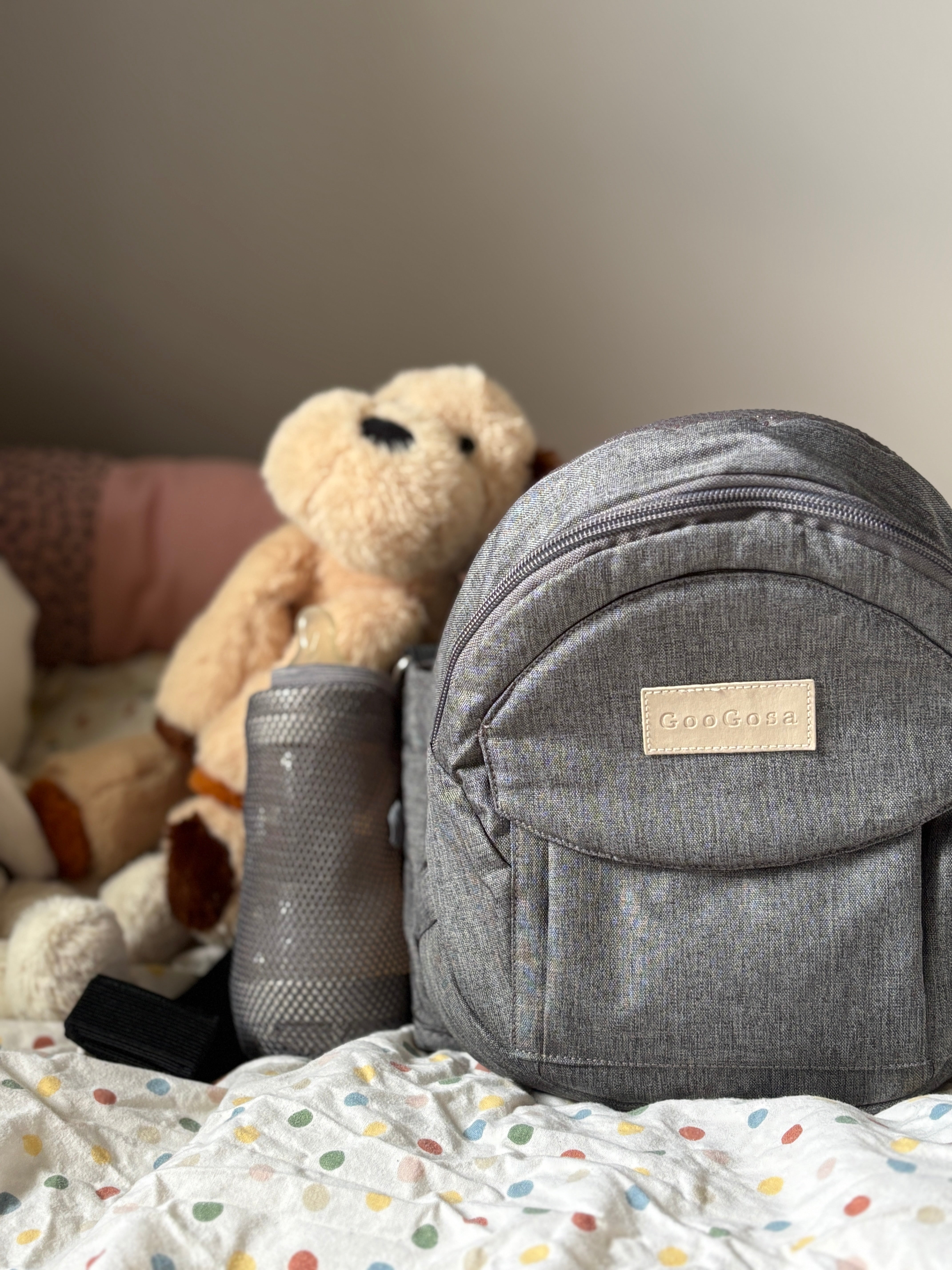
The GooGosa hip carrier is designed specifically for those short, frequent carrying sessions that are so common during a child’s early years.
For example, this might be when the child:
wants to come up and see what you're doing
gets tired while taking a walk
wants to be close while you're taking care of things at home
no longer wants to sit in the stroller
wants to be carried between the car and preschool
constantly wants to switch between walking on his own and being carried
Above all, it's the simplicity that makes a hip carrier practical. You can quickly put your child in and take them out just as quickly.
What is the difference between a hip carrier and a baby carrier?
A hip carrier and a traditional baby carrier serve somewhat different purposes.
In a baby carrier, the child is usually strapped against the adult’s body. A hip carrier like GooGosa, on the other hand, functions as a seat that the child sits in while the adult still holds the child. This makes the hip carrier particularly convenient for children who often want to be up and down or for children who don’t like being “strapped in.”
You don't have to fasten and unfasten your child every time, which can be convenient during short periods of carrying throughout the day.
A hip carrier, therefore, does not necessarily replace a baby carrier. Instead, many parents use the two products on different occasions.
Why use a hip carrier?
Carrying a child on the hip feels natural to many parents. We often do it automatically without even thinking about it. However, as the child gets heavier, you may start to compensate by sticking your hip out, leaning your upper body to the side, or tensing your arms and shoulders. This is where a hip carrier for children can help.
The child has a stable place to sit while you can still hold the child close to your body.
Benefits of a Hip Carrier
A hip carrier can:
Take the weight off your arms when carrying something
help distribute the child's weight
reduce the need to push your hips forward when carrying
make it easier when the child often wants to go up and down
be quicker to use than a traditional baby carrier
give the child the opportunity to be close while still being able to see their surroundings
serve as a convenient addition to a stroller and baby carrier
For many families, the hip carrier therefore becomes one of the most frequently used items once the child has outgrown the very earliest stages of infancy.
When can you start using a hip carrier?
When a hip carrier can be used depends on the child's development, size, and stability.
Children develop at different rates, so it is important not to rely solely on age or weight. The child needs to have sufficient neck and core stability for the carrying position being used.
For younger babies, GooGosa can instead be used as a support when, for example, you’re feeding, breastfeeding, or holding the baby in your arms, rather than as a traditional hip seat.
Always follow the product's current recommendations regarding age, height, and weight before use.
How should a hip carrier fit?
To ensure the best possible weight relief, it is important that the hip carrier fits properly.
GooGosa should normally be worn high and snug around the waist, rather than low on the hips.
Fasten the seat belt securely before placing the child in the seat. The child should also sit close to your body. The farther the child’s weight is from your body, the greater the strain you may feel.
Many people prefer to first fasten the GooGosa to the front of their body and then rotate the seat to the position where they want to carry the child.
You also don't have to carry the child exactly to the side of your hip. Depending on your body shape, it may feel more comfortable to position the seat slightly further forward, toward your stomach.
Is a hip carrier ergonomic?
When people are looking for an ergonomic hip carrier, they’re often trying to find a more comfortable way to carry their child in their daily lives.
Of course, a hip carrier doesn't take away the child's weight. However, it does change how the weight is distributed compared to when you hold the entire child directly in your arms.
GooGosa features a wide waist belt and a stable seat designed to provide support while carrying.
At the same time, how a hip carrier feels varies from person to person. Body shape, the child’s size, how high the waistband sits, and how close the child is positioned to the body all affect the experience.
That's why it can be helpful to try different positions to find the one that feels best for your body.
When is a hip carrier especially convenient?
A hip carrier is designed primarily for the many short periods of carrying that occur in everyday life.
On the walk
The child wants to walk on their own—until they suddenly don't want to walk another meter.
With a hip carrier, your child can quickly be held for a while without you having to support their entire weight with your arms.
At the preschool
Between the car, outerwear, bags, and drop-off, a hip carrier can make it easier to carry your child for short distances.
Home
There are times when young children want to be close almost all the time. A hip carrier can provide support during those brief moments when the child wants to be held.
On the trip
A baby carrier takes up significantly less space than a stroller and can therefore be a convenient addition for use at the airport, on vacation, or on an outing.
When the child doesn't want to sit in the stroller
Most parents of young children are familiar with this situation: they’ve brought the stroller, but their child absolutely refuses to sit in it.
In that case, it’s good to have a hip carrier close at hand.
How do you choose the right baby carrier?
When comparing different baby carriers, there are a few things worth paying extra attention to.
A wide, adjustable belt
A wider belt can help distribute the load over a larger area. At the same time, the belt needs to be able to be tightened securely enough to fit your body. The belt should have Velcro and a locking mechanism.
A stable seat
The seat must provide the child with a stable place to sit and be designed for the type of carrier for which the product is intended.
Easy to use
One of the biggest advantages of a hip carrier is its speed. It should therefore be easy to put on, adjust, and use when your child suddenly wants to be carried.
Fit
Every body is different. A hip carrier should therefore offer a wide range of adjustment options so you can find a position that feels comfortable for you.
GooGosa – a hip carrier for all the “up!” moments of toddler life
GooGosa was created to solve a very simple problem: Young children want to be carried a lot, and that gets tiring.
Our hip carrier is designed to make those frequent carrying moments easier—without having to buckle your child in every time they want to be held.
GooGosa has a stable seat and a wide, adjustable waist belt, and can be used in different positions depending on what feels best for you and your child.
The idea is not to replace all other ways of carrying children.
The idea is to make those hundreds of little moments—like “Mommy, pick me up,” “Daddy, carry me,” and “I can’t walk anymore”—a little easier.
Frequently Asked Questions About Hip Carriers
What is a hip carrier?
A hip carrier is a carrying aid consisting of a waist belt and a seat on which the child can sit while the adult holds the child. The hip seat helps distribute the child’s weight and can make shorter carrying sessions more comfortable.
How does a hip carrier work?
The hip carrier is fastened around the adult’s waist, and the child is placed in the seat. The child still needs to be held and supported, but the seat takes some of the strain that would otherwise be placed on the arms.
At what age can you start using a hip carrier?
It depends on the child's development and the manufacturer's recommendations. It is important that the child's neck and torso are stable, and you should always follow the product's current instructions regarding age, height, and weight.
Can you carry a child facing forward in a hip carrier?
The carrying positions depend on which baby carrier you use and your child’s development. With GooGosa, the seat can be positioned in different ways around your waist depending on your child’s size and what feels comfortable. Always follow the product’s instructions for safe use.
Is a hip carrier the same thing as a baby carrier?
No. In a traditional baby carrier, the child is usually secured against the adult’s body. A hip carrier functions as a seat, and the adult continues to hold the child. It is therefore particularly practical for shorter periods of carrying and when the child often wants to be facing up and down.
Does a hip carrier relieve pressure on the back?
A hip carrier does not eliminate the child’s weight, but it helps distribute the load differently than when carrying the child entirely in your arms. The degree of relief you feel varies depending on your body shape, the child’s size, and how the hip carrier fits.
Can you use a baby carrier instead of a stroller?
For shorter distances, many people can get by without a stroller and use a baby carrier instead. For longer walks or when the child needs to sleep, a stroller may still be the better option. The products therefore complement each other well.
Summary – That's Why Many People Choose a Hip Carrier from Svenska GooGosa
A hip carrier is a simple and convenient aid for parents whose children often want to be carried.
By providing the child with a stable seat and helping to distribute the weight, the hip carrier can make short carrying sessions throughout the day more comfortable. It’s especially practical during the period when the child wants to walk on their own, explore the world, and be picked up several times a day.
The GooGosa hip carrier is designed specifically for those moments—when your child wants to be close and your arms could use a little help.

Af Louise .